Request thermostat repair & replacement for a property in Tillsonburg. Include the equipment, the problem or planned work, and your location so the request can be reviewed.
How can a homeowner tell whether a thermostat fault or an equipment control problem needs investigation?
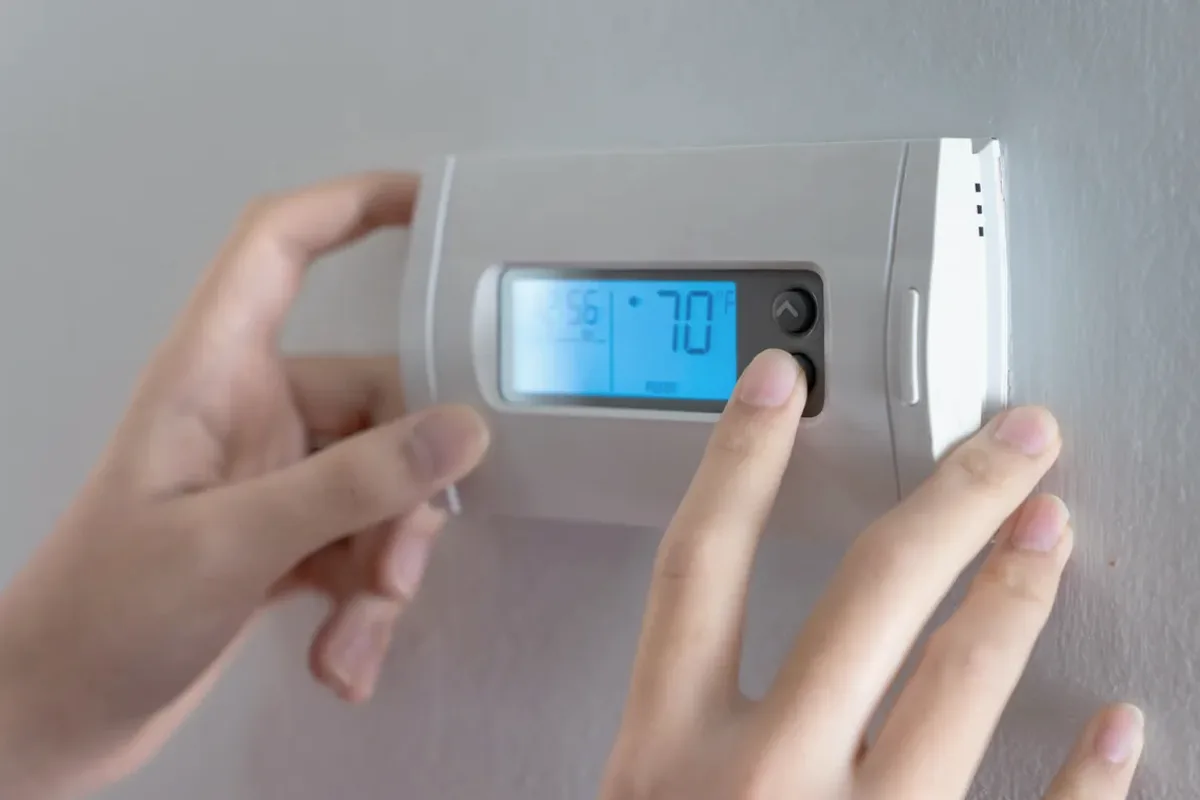
Thermostat service addresses controls that will not power on, display an unexpected temperature, call for heat or cooling inconsistently, or contribute to short cycling. Similar symptoms can also originate in wiring, the system's transformer, a sensor, or the HVAC equipment itself, so testing helps separate a thermostat fault from another control problem. Replacement planning must match the thermostat's functions to the equipment's stages and wiring.
Assessment compares the display and call for heating or cooling with wiring, sensor readings, available power, and the system's response. Short cycling may reflect a control signal or an equipment fault, so changing the thermostat without testing can miss the cause. For replacement, equipment stages, existing conductors, and desired scheduling or remote functions determine compatibility.
Thermostat power, sensor, wiring, and control diagnosis
Short cycling and system-response investigation
Programmable or smart thermostat compatibility
Assessment and Scope
Questions for the Proposed Work
01
Test the control signal before replacing parts
A blank screen, inaccurate reading, or unresponsive control can involve the thermostat, its wiring, power supply, or a connected system component. Comparing the displayed temperature with measured conditions and checking the control response helps narrow the fault. Internal electrical tests and wiring work should be handled by a service provider, not attempted by occupants.
02
Investigate short cycling in context
A heating or cooling system that starts and stops frequently may be responding to a faulty thermostat signal, but the thermostat should not be presumed responsible. The control call, wiring, sensor location, and equipment response help determine whether the issue lies in the thermostat or elsewhere. This distinction matters because replacing the control alone may leave the original fault unresolved.
03
Match a replacement to system capabilities
A programmable or smart thermostat should be selected only after confirming compatibility with the connected furnace, air conditioner, or heat pump. Equipment stages, wiring, and supported control functions can limit which models will operate correctly. Scheduling and remote features are preferences to compare, while the system's technical requirements determine whether the proposed thermostat is suitable.
Compare the next step
Discuss imminent heating or cooling replacement before buying a new control. Ask whether one device supports both the current and planned equipment and which configuration changes would be needed. Compare a suitable interim solution with the control included in the future system, including remote sensors and account requirements.
Thermostat wiring is not universal. Do not connect wires by colour alone or work on energized wiring; a compatible control must be configured for the equipment it serves.